Should You Upgrade from Viltrox Af 28Mm F 4 5 to Sjcam C400?
The landscape of modern digital imaging is increasingly defined by specialization. For years, the barrier between professional-grade mirrorless photography and high-intensity action capture was a wide chasm, defined by bulky bodies on one side and rugged, sensor-limited cubes on the other. However, as creators demand more versatility, we find ourselves comparing tools that, on the surface, seem to occupy entirely different dimensions of the market. This brings us to a peculiar yet highly relevant question for the current year: Is it time to move from the ultra-compact Viltrox AF 28mm f/4.5 "chip-lens" setup to the dedicated imaging powerhouse of the SJCAM C400?
To understand if this "upgrade" makes sense, one must first acknowledge that these two devices represent different philosophies of "compactness." The Viltrox AF 28mm f/4.5 is a marvel of optical engineering—a full-frame autofocus lens so thin it effectively turns a high-end mirrorless body into a pocketable street machine. On the other side, the SJCAM C400 is a dedicated, standalone camera system designed to survive where a mirrorless camera would fail, while offering a suite of modern features like 4K recording and integrated stabilization. This article examines the architectural differences, image quality nuances, and the ergonomic shifts required when moving between these two distinct ecosystems.
Understanding the Viltrox AF 28mm f/4.5: The Minimalist’s Dream
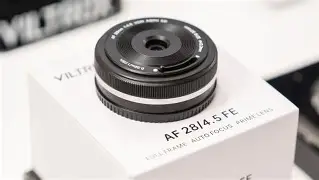
The Viltrox AF 28mm f/4.5 has gained a cult following primarily among Sony E-mount and Nikon Z-mount users who are tired of the bulk traditionally associated with full-frame photography. Often referred to as a "pancake" lens, or more accurately a "biscuit" lens due to its extreme thinness, it measures only a few millimeters in depth. It features a built-in lever to protect the front element, eliminating the need for a lens cap, which further enhances its "grab-and-go" appeal.
From an optical standpoint, the f/4.5 aperture is relatively slow, but because it is designed for full-frame sensors, it still manages to produce a pleasing depth of field and excellent low-light performance when paired with a modern sensor like those found in the Sony A7C series. The 28mm focal length is the classic "storytelling" wide angle—neither too wide to distort faces nor too narrow to feel restrictive in tight city streets. For the photographer who values being "invisible," this lens is the gold standard.
However, the Viltrox is just a lens. Its performance is entirely dependent on the camera body it is attached to. This means you are still carrying a device with a mechanical shutter, a fragile articulating screen, and a sensor that is exposed to the elements every time you swap lenses. While the lens itself is tiny, the system remains a "camera" in the traditional, delicate sense of the word.
Analyzing the SJCAM C400: The Versatile Powerhouse
The SJCAM C400 represents a shift toward the "everything-in-one" philosophy. It is not a lens; it is a complete imaging solution. Where the Viltrox aims to make a professional camera smaller, the SJCAM C400 aims to make a small camera more professional. It features a ruggedized exterior, built-in dual screens for vlogging and menu navigation, and a sensor optimized for high-bitrate video and crisp wide-angle stills.

The C400 is built for the era of short-form content. While the Viltrox is a tool for the patient observer, the C400 is the tool for the active participant. It features advanced electronic image stabilization (EIS) that rivals mechanical gimbals, something no lens—regardless of how small it is—can provide on its own. Furthermore, the C400 is designed to be mounted. Whether it’s on a helmet, a chest rig, or a tripod, its form factor allows for perspectives that are physically impossible to achieve with a full-frame camera body and a Viltrox lens.
The sensor in the SJCAM C400 is smaller than a full-frame sensor, which is the primary "trade-off." However, in good lighting, the gap in perceived quality has narrowed drastically. With 4K/60fps capabilities and high-speed photography modes, the C400 offers a level of utility that a static prime lens like the Viltrox simply cannot match. It isn't just about taking a photo; it’s about capturing a moment from the inside out.
Shop the latest Cameras & Photography picks on Amazon.
Browse Now →Comparison of Specifications
| Feature | Viltrox AF 28mm f/4.5 (Lens only) | SJCAM C400 (Camera System) |
|---|---|---|
| Type | Full-Frame Prime Lens | Action/Vlog Camera System |
| Aperture/Lens Speed | Fixed f/4.5 | Optimized f/2.8 lens |
| Focusing | High-speed VCM Autofocus | Fixed Deep Focus / AF Enhanced |
| Stabilization | Dependent on Camera IBIS | Integrated 6-Axis Gyro (EIS) |
| Video Capability | Body Dependent (up to 8K) | Internal 4K/60fps, 2K/120fps |
| Durability | Standard (Metal build, not waterproof) | Ruggedized, Waterproof (w/ case) |
| Weight | Approx. 60g | Approx. 95g (including battery) |
Pros and Cons: The Viltrox AF 28mm f/4.5
- Pro: Superb Full-Frame Rendering. When paired with a high-resolution sensor, this lens delivers sharpness across the frame that action cameras struggle to replicate.
- Pro: Pocketability. It is genuinely the closest thing to having a "cap" that also takes photos. It transforms bulky cameras into daily-carry items.
- Pro: Fast Autofocus. The Voice Coil Motor (VCM) is nearly silent and incredibly fast, making it ideal for candid street photography where speed is everything.
- Con: Slow Aperture. At f/4.5, you will need to push your ISO in indoor settings, which can introduce noise if your camera sensor isn't top-tier.
- Con: Fixed Focal Length. 28mm is versatile, but you are stuck with it. There is no zooming or cropping without losing significant resolution.
- Con: Fragility of System. You are still using a mirrorless camera. High vibration or water exposure will end your shoot.
Pros and Cons: The SJCAM C400
- Pro: Total Creative Independence. You don’t need to worry about lens caps, sensors, or camera bodies. It is a one-and-done solution.
- Pro: Exceptional Stabilization. The 6-axis gyro stabilization allows for smooth footage even when running or biking—tasks where the Viltrox would produce shaky, unusable video.
- Pro: Dual Screen Interface. The front-facing screen makes vlogging and framing selfies infinitely easier than guessing or using a flip-out screen on a larger camera.
- Pro: High Frame Rates. For sports and fast action, having 120fps or 240fps options allows for cinematic slow-motion that the Viltrox setup often cannot achieve due to data throughput limits of larger sensors.
- Con: Smaller Sensor. In very low light, the SJCAM C400 will show more grain than a full-frame sensor with a Viltrox lens.
- Con: Narrow DOF. If you love "bokeh" or blurry backgrounds, the C400 will disappoint, as it is designed for a deep-focus look where everything is sharp.
Real-World Use Cases: Which One Wins?
Street Photography and Travel
For the traveler who wants to document architecture and local culture with a "fine art" feel, the Viltrox setup is superior. The rendering of light and the ability to crop into a 40MP or 60MP full-frame file gives you a level of finish that the SJCAM C400 isn't designed for. The 28mm focal length is perfect for capturing the scale of a cathedral or the intimacy of a sidewalk cafe.
Adventure and Extreme Sports
This is where the "upgrade" to the SJCAM C400 becomes mandatory. Attempting to use a Viltrox 28mm on a Sony A7C while skiing or mountain biking is a recipe for disaster. The C400’s rugged build and massive field of view are specifically tuned for these high-adrenaline moments. The wide-angle lens of the C400 captures more of the environment, giving the viewer a sense of "being there" that the narrower 28mm perspective lacks.
Vlogging and Social Media
The SJCAM C400 is the clear winner for content creators. While the Viltrox produces a "prettier" image, the C400 is more functional. The ability to quickly switch between vertical and horizontal modes, the built-in microphone optimization, and the front-facing screen mean you spend less time fussing with gear and more time talking to your audience. The Viltrox is a photographer's tool; the C400 is a creator's tool.
The Buying Guide: Should You Switch?
Deciding between these two options isn't just about comparing sharpness; it's about evaluating your lifestyle. You should stay with (or buy) the Viltrox AF 28mm f/4.5 if you are a purist. If your joy comes from the "clack" of a mechanical shutter, the subtle gradations of color in a sunset, and the ability to control every aspect of exposure manually, the Viltrox is an unbeatable accessory. It makes your heavy gear feel light again.
Conversely, you should "upgrade" to the SJCAM C400 if your gear is preventing you from living in the moment. If you find yourself leaving your mirrorless camera at home because you're afraid of breaking it, or because it's too much work to set up a shot, the C400 is the solution. It is the camera you can take anywhere, from the beach to the bottom of a canyon, without a second thought.
Consider the following questions before making your choice:
- How do you view your work? If you primarily view photos on a large 4K monitor or print them, the Viltrox's sensor-size advantage matters. If you share mostly on Instagram or TikTok, the C400's quality is more than sufficient.
- Do you need stabilization? If you record a lot of walking-and-talking video, the C400 is objectively better. The Viltrox requires a steady hand or a heavy gimbal.
- What is your environment? Dust, rain, and sea spray are the enemies of the Viltrox. They are the Playground of the C400.
Technical Deep Dive: Optics vs. Algorithms
A key area of debate is how these two handle image processing. The Viltrox AF 28mm f/4.5 relies on pure glass. With 6 elements in 6 groups, including ED (Extra-low Dispersion) glass, it aims to minimize chromatic aberration naturally. It produces a "raw" file that is a Playground for editors using software like Lightroom or Capture One. You have 14 bits of data to pull shadows and push highlights.
Discover deals on Cameras & Photography — updated daily.
View Offers →The SJCAM C400, like most modern action cameras, relies heavily on computational photography. Its image processor works in real-time to correct barrel distortion, enhance colors, and smooth out jitters via the 6-axis gyro. This results in a "finished" look straight out of the camera. While you have less "headroom" to edit the files later, the camera does the heavy lifting for you during the shoot. For many, this efficiency is worth the trade-off in raw sensor data.
Furthermore, the autofocus system of the Viltrox is a standout feature for its price point. Utilizing a chip-controlled VCM, it can track eyes and faces with the frightening accuracy of the host camera. In contrast, the SJCAM C400 often utilizes a "deep focus" lens design, where everything from a few feet to infinity is in focus. This sounds like a shortcut, but for action, it is a massive benefit—you never have to worry about the camera "hunting" for focus while you're in the middle of a jump or a wave.
Conclusion
So, should you upgrade from the Viltrox AF 28mm f/4.5 to the SJCAM C400? The answer depends on whether you are looking for a better lens or a better experience. The Viltrox is a masterclass in making professional optics accessible and portable. It breathes new life into full-frame cameras and encourages a minimalist approach to traditional photography. It is an "upgrade" in terms of portability for someone already committed to a lens-exchange system.
However, the SJCAM C400 is an "upgrade" in terms of capability. It frees you from the constraints of the traditional camera body. It offers stabilization, durability, and specialized video features that no pancake lens can provide. If you find that your photography style is becoming more active, more social-media focused, and more adventurous, the move to a dedicated system like the C400 is not just a change in gear—it is a change in what you are able to capture.
Ultimately, the Viltrox 28mm is a lens for the mind, demanding thought and composition. The SJCAM C400 is a camera for the body, designed to capture the world as you move through it. Many creators find that there is room for both in their kit: the Viltrox for the quiet walks, and the SJCAM C400 for the loud, fast, and unforgettable moments of life.